
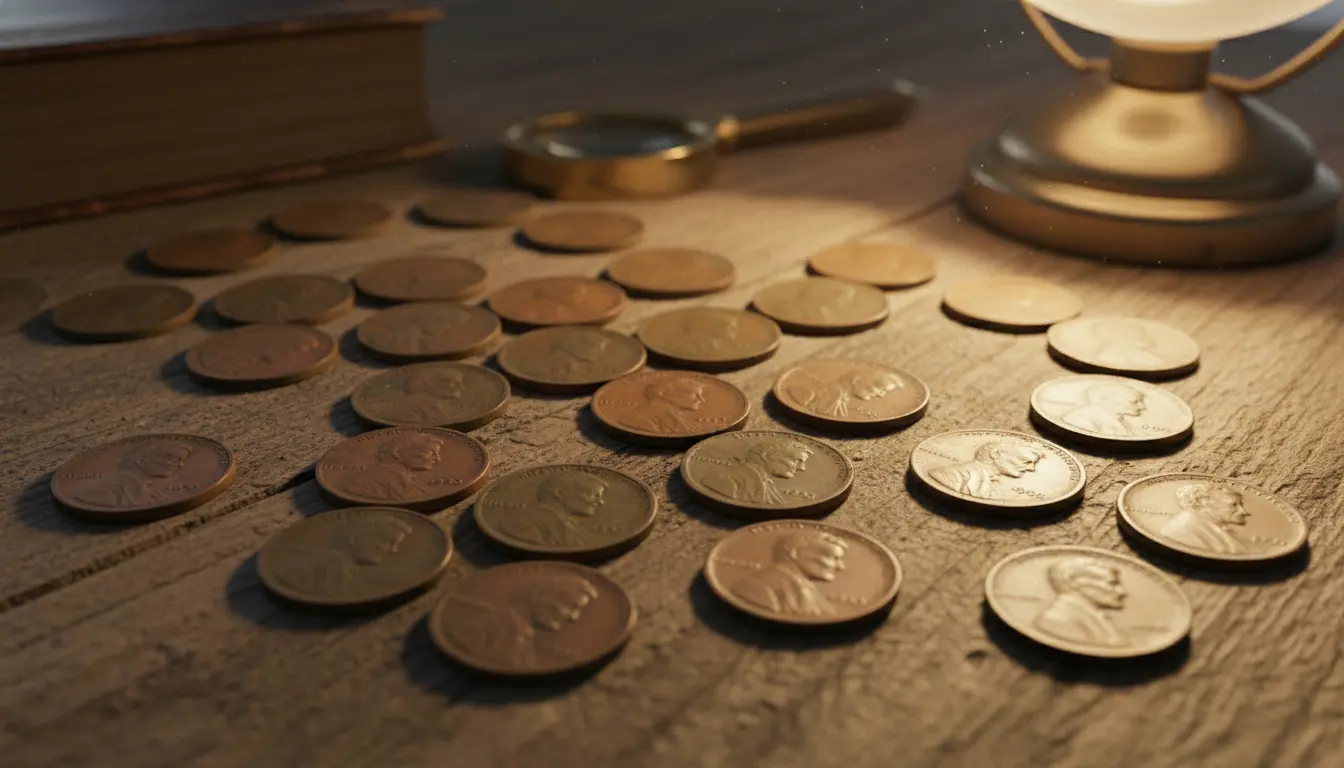
Why 1909 to 1958 Wheat Pennies Matter
Wheat pennies were produced from 1909 to 1958 and remain among the most collected U.S. coins. Their small size hides many stories: design changes, mint marks, wartime metal shifts, and notable errors.
For practical collectors, these cents are affordable entry points. Knowing which dates and varieties to watch for helps you find real value in rolls or jars.
Key Features of 1909 to 1958 Wheat Pennies
The design shows Abraham Lincoln on the obverse and wheat ears framing the reverse. Important identification points include date, mint mark, and reverse initials in early examples.
- Obverse: Lincoln’s portrait; date at the right.
- Mint mark: Appears below the date (S for San Francisco, D for Denver, none for Philadelphia).
- Reverse (1909 only): Some 1909 coins show the designer initial VDB on the reverse.
Why the 1909 Date Is Special
The Lincoln cent debuted in 1909. Early examples include the VDB initial of designer Victor David Brenner on the reverse. That initial was removed mid-year, creating two clear varieties.
The 1909-S VDB and 1909-S (no VDB) are particularly sought after by collectors, making the 1909 date a major starting point for study.
Common High-Value Dates and Varieties
Not every wheat penny is valuable, but some dates and error types carry premiums. Learn to recognize them before sending coins for authentication.
- 1909-S VDB — A key date because of limited supply and the VDB initial.
- 1914-D — A Denver mint key that is scarce in high grade.
- 1922 No D — Known for weak or missing D mintmarks on some strikes.
- 1955 Doubled Die Obverse — A famous doubling error visible on the date and other obverse features.
- 1943 Bronze — Extremely rare errors in a year when most cents were struck on steel.
How to Spot These Varieties
Look closely at the reverse for the VDB initials on 1909 pieces. For 1955 doubled die, inspect the date and LIBERTY for doubled imagery. For 1943 issues, a simple magnet test can help separate steel cents from bronze.
Use a loupe (10x) and a steady light. If you spot something unusual, document it with clear photos and consider third-party grading.
The 1955 doubled die obverse on a Lincoln cent shows a very noticeable doubling of the date and words like LIBERTY. It became one of the most popular error coins for modern collectors.
Practical Steps to Check Wheat Pennies in Circulation
Turn routine sorting into a discovery process. Follow these practical steps when you examine wheat pennies:
- Separate by date ranges (1909–1919, 1920–1939, 1940–1958) to speed inspection.
- Use a 10x loupe and steady light for tiny details like VDB or doubling.
- Test 1943 cents with a magnet: steel cents will attract, bronze won’t.
- Note mint marks under the date and write down suspect dates for later research.
When to Get Professional Grading
If you find a suspected key date, major error, or an unexpectedly high-grade coin, consider professional grading (PCGS, NGC, ANACS). Certification substantiates value at auction or sale.
Grades matter: a rare date in poor condition may be worth modestly more than face value, while high-grade certified pieces can command significant premiums.
Storage, Preservation, and Avoiding Mistakes
Handle coins by the edges and store them in inert holders. Avoid cleaning coins—cleaning drastically reduces value.
Use acid-free flips, coin folders, or slabs for certified pieces. Label storage with date, mint mark, and any observed variety.
Common Pitfalls
- Cleaning coins with chemicals or abrasives.
- Assuming color or shine equals value—patina can be normal and acceptable.
- Rushing grading decisions without documentation or authentication.
Real-World Example
A casual collector sorted a box of mixed coins and found a 1909 cent with an obvious VDB on the reverse. After photographing and confirming details with a local dealer, they submitted it for grading. The certified coin attracted serious collector interest at auction because of its clear VDB and solid strike.
The lesson: careful inspection and documentation can turn an ordinary search into a collecting success.
Final Checklist for Finding Hidden Treasure in Your Pocket
- Always check the date and mint mark on the obverse.
- Use a loupe and good light to spot VDB, doubling, or missing mintmarks.
- Magnet-test 1943 cents before assuming composition.
- Avoid cleaning; photograph and document before sending for authentication.
- Consult price guides and auction records before selling or buying.
Wheat pennies are more than nostalgia; they are a practical way to learn numismatics while holding pockets of history. With a consistent routine and a few tools, you can find the hidden value in ordinary change.