
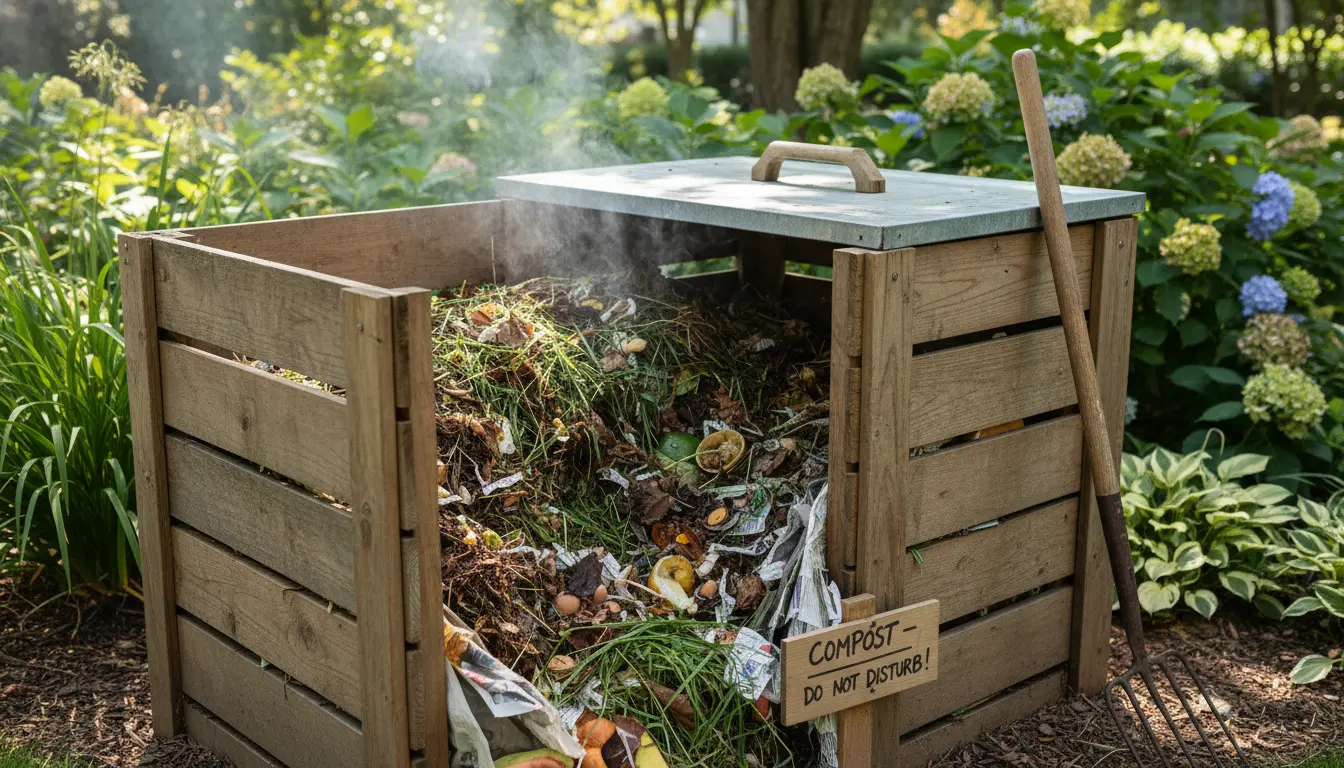
Beginner’s Practical Guide to Home Composting
Home composting turns kitchen scraps and yard waste into nutrient-rich soil. This guide explains practical steps to start composting at home with minimal equipment.
Why Home Composting Matters
Composting reduces household waste and returns organic matter to the soil. It improves garden soil structure and reduces the need for chemical fertilizers.
Composting at home also lowers methane emissions from landfills and saves money on trash collection. Small daily efforts create real environmental benefits.
What You Need to Start Home Composting
You can begin composting with a simple setup and common materials. The important elements are a balance of carbon and nitrogen, airflow, moisture, and time.
Basic equipment for composting at home
- A compost bin or pile
- A pitchfork or turning tool
- A kitchen container for scraps
- Optional thermometer to monitor temperature
Materials to compost: greens and browns
Use a mix of nitrogen-rich ‘greens’ and carbon-rich ‘browns’. Aim for roughly a 2:1 or 3:1 ratio of browns to greens by volume.
- Greens: vegetable peels, fruit scraps, coffee grounds, fresh grass clippings
- Browns: dry leaves, shredded paper, straw, cardboard
Choosing a Bin for Home Composting
Select a bin based on space, budget, and how quickly you want compost. Enclosed tumblers speed up decomposition but require turning. Open piles are cheap and work well in larger yards.
For small balconies, consider a worm bin (vermicomposting) to process food scraps indoors. Choose a bin that keeps pests out and retains moisture.
Step-by-Step: How to Start Composting at Home
Follow these clear steps to begin home composting effectively. Consistent maintenance keeps the process moving and reduces odors.
1. Pick a location and prepare the bin
Place the bin on dirt or grass to allow worms and microbes to access the pile. If on a hard surface, add a base layer of coarse material for drainage.
2. Build the first layers
Start with a 4-6 inch layer of coarse browns for airflow. Alternate layers of greens and browns, keeping the browns slightly thicker.
3. Maintain moisture and airflow
Keep the compost as damp as a wrung-out sponge. Turn or mix the pile every 1–2 weeks to add oxygen and speed decomposition.
4. Monitor and adjust
- If the pile is too wet and smells, add more browns and turn more often.
- If decomposition is slow, add greens and increase turning.
- A hot pile (130–160°F) breaks down faster but is not required for successful home composting.
Troubleshooting Common Home Composting Problems
Many issues are easy to fix with small adjustments. Check moisture, balance, and aeration first.
- Bad smell: usually too wet or compacted; add browns and turn.
- Slow breakdown: not enough nitrogen or oxygen; add greens and turn regularly.
- Pests: avoid meat, dairy, oily foods; use a closed bin and bury scraps deeper.
Using Finished Compost
Compost is ready when it looks dark and crumbly and has an earthy smell. Screening removes large pieces before use.
Use finished compost as a soil amendment, in potting mixes, or as a mulch top dressing. A 1–3 inch layer improves soil structure and retains moisture.
Composting can reduce household waste by up to 30% and cut methane emissions from landfills. Even a small indoor worm bin processes most food scraps.
Simple Home Composting Case Study
Case: A family of four started a 3×3 foot enclosed bin in a suburban backyard. They added kitchen scraps and yard leaves for one year.
They turned the bin every two weeks and kept a rough 3:1 ratio of browns to greens. After six months, the bin produced usable compost for vegetables and mulch.
Result: The family cut their weekly trash by two bags and saw improved tomato yields the following season.
Quick Tips and Examples for Success
- Collect scraps in a ventilated counter caddy to reduce odors before transfer.
- Shred large browns like cardboard to increase surface area and speed decomposition.
- Use finished compost at planting time or mix into raised beds for steady nutrient release.
Final Practical Checklist for Home Composting
- Choose the right bin for your space.
- Balance greens and browns and monitor moisture.
- Turn the pile to add oxygen every 1–2 weeks.
- Avoid meat and dairy to keep pests away.
- Use finished compost to improve garden soil.
Home composting is a low-effort, high-impact practice. Start small, observe the process, and adjust as you learn. Over time, composting at home becomes an easy routine that benefits your garden and the planet.