
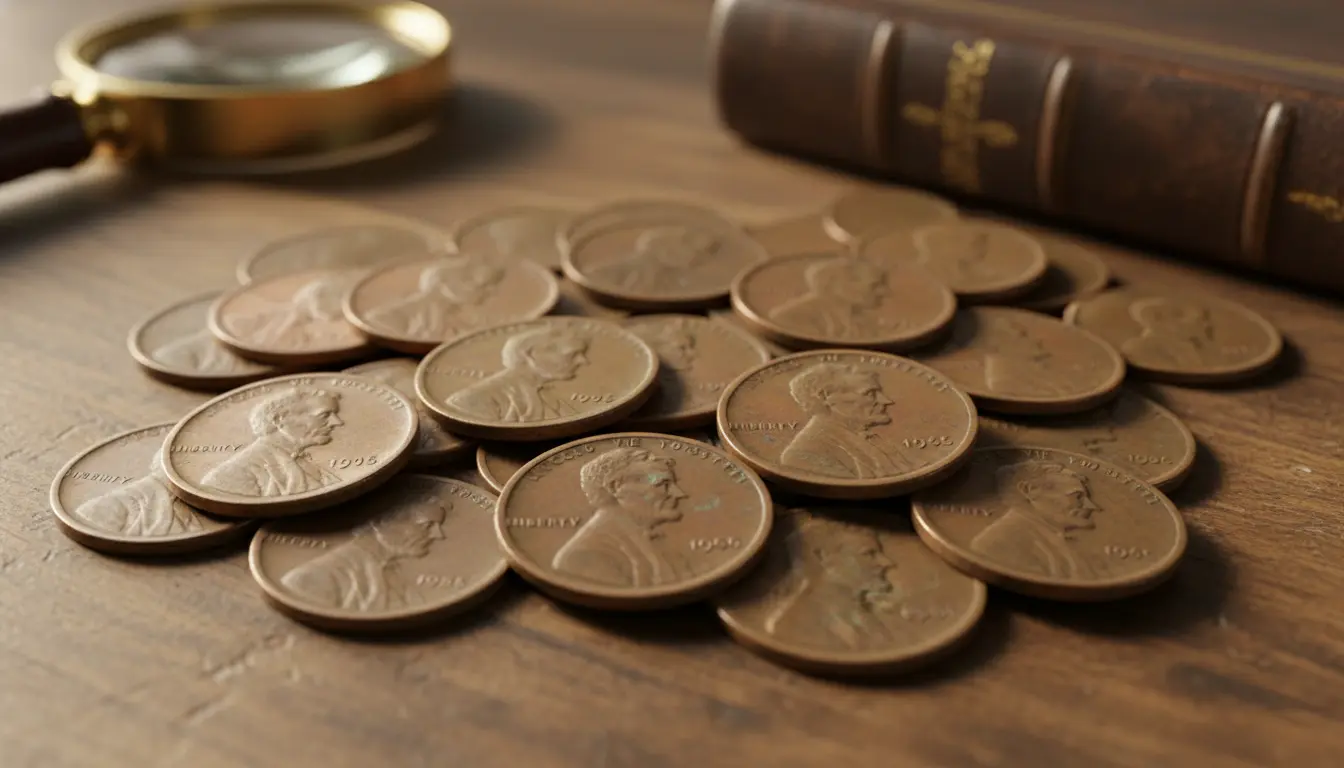
Knowing which pennies from the twentieth century are rare helps collectors focus time and budget on the most desirable pieces. This practical guide names the top 11 rare pennies of the twentieth century, shows key identification features, and offers basic value guidance.
Top 11 Rare Pennies of the Twentieth Century
Below are widely recognized rare and high-value twentieth-century Lincoln cents. Each entry includes why the coin is scarce and what to look for when you inspect a coin.
1. 1909-S VDB Lincoln Cent
Minted in San Francisco with Victor David Brenner’s initials (VDB) on the reverse, the 1909-S VDB has a low mintage and is highly sought. Key features: heavy relief, sharp VDB initials, and strong strike. Values rise steeply with grade.
2. 1914-D Lincoln Cent
This Denver-minted 1914 cent has a small mintage and is rare in any grade. Look for a clear D mint mark and well-defined date digits. Even circulated examples command premiums among collectors.
3. 1922 Plain (No D) Lincoln Cent
Many 1922 cents show a faint or missing Denver D mint mark due to weak strikes; completely plain 1922 cents are scarce. Inspect the reverse for any trace of a D or impression. Authentication and grading greatly affect value.
4. 1931-S Lincoln Cent
The San Francisco 1931 cent had a low production and is uncommon in higher grades. Look for a small S mint mark beneath the date. Even modestly worn examples are collectible.
5. 1943 Bronze Lincoln Cents (Copper Errors)
Most 1943 cents were struck in steel because copper was needed for war materials. Bronze 1943 cents resulted from planchet mix-ups and are extremely rare. These errors are among the most valuable twentieth-century pennies.
6. 1944 Steel Lincoln Cents
Conversely, a few 1944 cents were mistakenly struck on leftover 1943 steel planchets. These steel 1944 cents are very rare and easily identified by their silver-gray color and magnetic attraction.
7. 1955 Doubled Die Obverse
The 1955 doubled die obverse (DDO) shows prominent doubling on the date and the motto IN GOD WE TRUST. This is a classic error coin with strong collector demand. Look for doubled lettering rather than merely doubled images from die wear.
8. 1969-S Doubled Die Obverse
A rare San Francisco doubled die variety, the 1969-S DDO is prized when genuine. Many counterfeits exist, so authentication by a trusted grading service is important. Genuine examples can achieve high prices.
9. 1972 Doubled Die Obverse
The 1972 doubled die obverse is a major variety with clear doubling on the date and lettering. Both business-strike and mint varieties exist; the degree of doubling and strike quality affect value.
10. 1983 Doubled Die Obverse (Selective Varieties)
Some 1983 Lincoln cents show notable doubling on the obverse. These are less famous than earlier doubled dies but still collectible when the doubling is obvious. Grading and certification help verify authenticity.
11. 1992 Close AM / 1999 Wide AM Varieties
Late-twentieth-century Lincoln cents include varieties like the 1992 Close AM and 1999 Wide AM. They are collectible among variety specialists and can fetch premiums in higher grades or certified condition.
Twentieth-century pennies often trade based on certification and grade. A single coin’s market price can vary from a few hundred to tens of thousands of dollars depending on authenticity and condition.
How to Identify Rare Pennies of the Twentieth Century
Identification starts with careful visual inspection. Use magnification, good lighting, and a scale when needed.
- Check for mint marks (D, S) and unusual placements or absence.
- Look for minting errors: doubled dies, wrong planchets, and missing elements.
- Note color and magnetic properties for 1943/1944 steel or bronze errors.
- Compare to reference photos or a reputable variety guide before concluding rarity.
Practical Tips for Collectors
Authentication matters. For high-value or questionable coins, use an established third-party grading service.
Protect coins in inert holders, avoid cleaning, and document provenance when possible. Small investments in proper storage and grading often increase resale value.
Real-World Example: A Small Case Study
A community collector found a worn Lincoln cent while sorting estate coins. Initial inspection suggested heavy doubling on the date, so the collector submitted it to a grading service. The certified result confirmed a genuine 1955 doubled die obverse and the coin later sold privately for a five-figure amount. This shows how careful inspection and certification can turn an ordinary find into a valuable sale.
Summary
The top 11 rare pennies of the twentieth century include classic keys like the 1909-S VDB and dramatic errors such as 1943 bronze or 1944 steel cents. Correct identification, proper handling, and professional grading are essential steps for any collector or seller. Keep reference materials handy and verify unusual finds before making value judgments.
For more detailed research, consult variety guides, auction records, and certified coin databases to confirm mintage numbers and recent sale prices.