
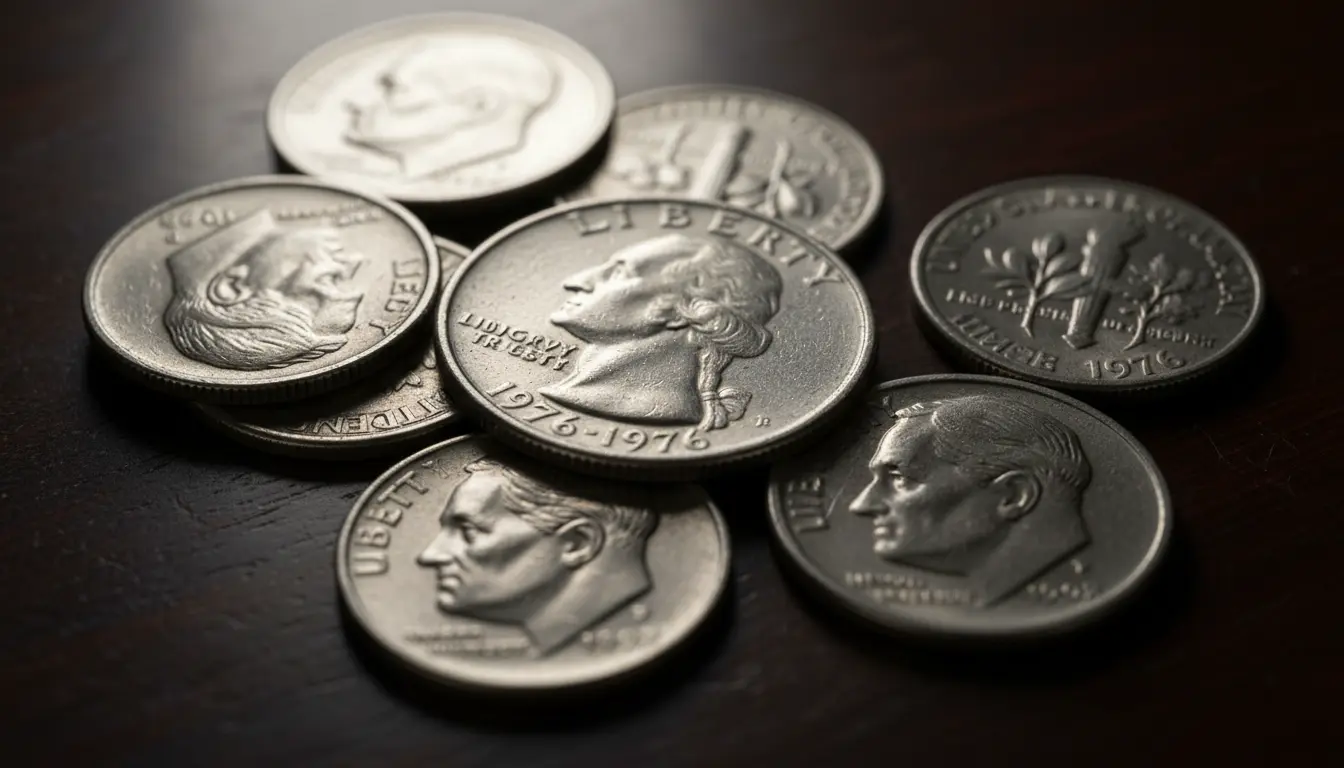
Understanding the claim about $93 Million
Recently, videos and social posts have suggested that a small batch of common-looking coins — five rare dimes and a Bicentennial quarter — are worth $93 million. That headline sounds exciting, but real coin value is rarely that simple.
This article explains what makes dimes and a Bicentennial quarter valuable, lists five dimes collectors seek, and shows practical steps to verify and sell rare coins safely.
Five rare dimes to know
Collectors and dealers often point to specific dates and varieties as the most valuable dimes. These coins are rare because of low mintage, surviving population, or unique errors. Below are five dimes that can be very valuable in original condition.
1894-S Barber Dime
The 1894-S Barber dime is one of the most famous rare dimes in U.S. collecting. Only a handful are known to exist and high-grade examples trade for well into six or seven figures at auction.
1916-D Mercury Dime
The 1916-D Mercury dime is scarce, especially in higher grades. Condition and originality strongly affect price, and certified high-grade specimens command premium prices from collectors.
1796 Draped Bust Dime
Early Draped Bust dimes are rare because of low mintages and survival rates. The 1796 is collectible for its age, struck quality, and historical significance.
Early Capped Bust and Seated Liberty Dimes
Certain dates and overdates in the Capped Bust and Seated Liberty series are scarce. These can be valuable when survivors are few or when notable die varieties exist.
Key Date Proof and Mint Error Dimes
Proof dimes and error coins (double dies, significant die breaks, wrong planchets) can be worth thousands to tens of thousands depending on severity and collectibility.
What about a Bicentennial Quarter?
The 1976 Bicentennial quarter is common in circulation, but notable varieties exist. Proof silver Bicentennial quarters and certain die errors attract collector interest.
However, a single Bicentennial quarter, without a rare variety or error and without exceptional condition, is unlikely to be worth more than face value or a modest premium.
The truth behind the $93 million headline
Headlines claiming astronomical totals often assume each coin is at the extreme top auction price or combine multiple unlikely factors. Several issues make the $93 million claim dubious.
- Not every specimen of a rare date is in top condition; poor condition reduces value dramatically.
- Grading and authentication are required before sale; uncertified coins fetch lower prices or are rejected.
- Market demand matters; one buyer paying a record price doesn’t mean every similar coin will sell for the same amount.
How to verify and value a rare dime or quarter
If you find what you think is a valuable coin, take these practical steps.
- Do not clean or polish the coin; cleaning destroys value.
- Compare the coin to online price guides and population reports to look for rarity and known varieties.
- Get professional authentication and grading from a reputable service (PCGS, NGC, ANACS).
- Consult multiple dealers and auction houses for appraisal and sale options.
Authentication and grading
Certification gives buyers confidence and defines market value. Grading affects price more than date in many cases, so professional grading is often worth the fee.
Practical example: A real-world case study
Case study: An estate sale yielded an 1894-S Barber dime that a family member assumed was an ordinary old coin. They followed the steps above — no cleaning, multiple appraisals, then professional grading. The coin authenticated as an original 1894-S and sold to a collector at auction for over a million dollars.
This example shows how proper handling and verification can unlock real value, while casual claims about totals without documentation should be treated skeptically.
Not all rare dates equal high value. A common factor for high prices is a combination of rarity, exceptional condition, and documented provenance.
Red flags in viral coin claims
Be cautious when a social post presents a huge dollar figure with little evidence. Look for these red flags before you act.
- No photos or poor-quality images of coins.
- Price estimates far above established auction records without provenance.
- Pressure to sell quickly or offers from unknown buyers.
Summary: What to do if you find rare dimes or a Bicentennial quarter
Keep the coin in current condition and document where it was found. Use reference guides and seek professional grading. Treat viral valuations as a starting point for inquiry, not a final fact.
By following practical steps — authentication, grading, and careful marketing — you can determine the true market value and avoid scams tied to sensational claims like $93 million.
For realistic results, work with experienced numismatic professionals and auction houses. That is the best path to converting an old coin into its true collector value.