
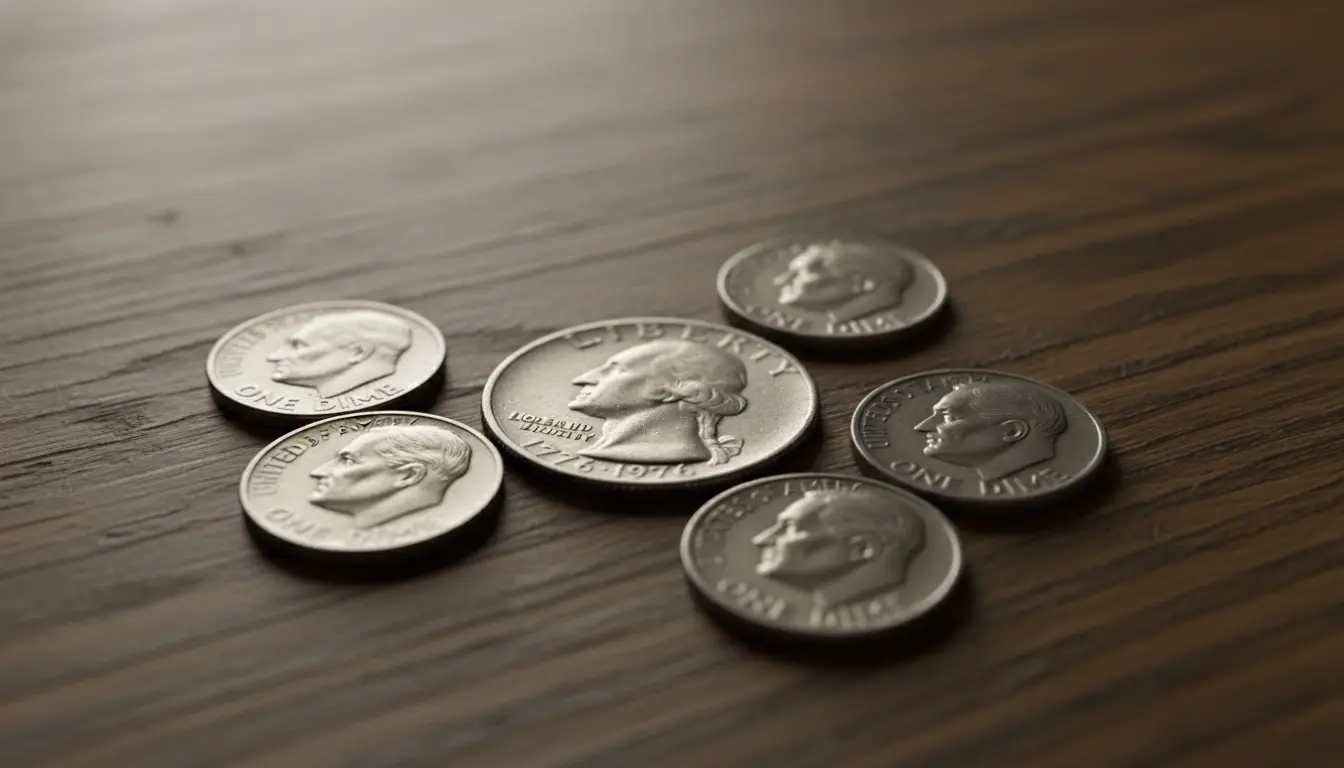
Social posts claiming someone found five rare dimes and a Bicentennial quarter worth $93 million have circulated widely. This article explains which dimes collectors actually prize, what makes a Bicentennial quarter valuable, and practical steps to verify and sell rare coins.
Which rare dimes collectors watch for
Not every old dime is valuable. Value depends on rarity, condition, mintmark, and documented provenance. Here are five dime types that often command attention from collectors and dealers.
1. 1894-S Barber Dime
The 1894-S Barber dime is one of the best-known rare U.S. dimes. Only a very small number were struck, and surviving pieces are extremely scarce.
Why it matters: exclusivity and collector demand give this dime a high auction profile, with well-documented sales over time.
2. 1916-D Mercury Dime
The 1916-D Mercury (Winged Liberty) dime is key for Mercury series collectors. Low mintage and early date make it a target for anyone building a complete set.
Why it matters: mintmark and condition determine whether a specimen sells for hobby-level prices or significant sums.
3. Early Draped Bust and Capped Bust dimes
Dimes from the late 18th and early 19th centuries are rare because many were melted or lost. Any well-preserved Draped Bust or Capped Bust dime is worth careful inspection.
Why it matters: very old dimes are historically important and often sought by advanced collectors.
4. Proof coins and presentation strikes
Proof dimes and specially struck presentation pieces were produced in limited numbers. A rare proof in high grade can outperform a common business-strike dime by a large margin.
Why it matters: proof coins often have mirror-like fields and strong details that command premiums.
5. Error dimes and notable varieties
Die breaks, repunched mintmarks, and overdates can create collectible varieties. Some varieties are rare and desirable if documented and authentic.
Why it matters: certain errors are widely tracked and listed in specialized references, and some attract serious bidders at auction.
Bicentennial quarter value: what matters
The 1976 Bicentennial quarter was issued in huge quantities. Most are common and worth face value to a small premium in circulated condition.
When a Bicentennial quarter becomes valuable, it is usually for one of these reasons:
- Proof or silver-clad mint sets with original packaging and high grade
- Clear, authenticated mint errors or varieties
- Exceptional provenance or celebrity ownership
The truth behind the 93 million claim
Claims that a handful of mixed common coins add up to tens of millions are almost always incorrect. Here’s why:
- Most collectible dimes, even rare ones, sell for thousands to at most a few million individually.
- Viral posts often conflate expert auction highs, private sales, and theoretical melt value.
- Authentication and professional grading are required for top-dollar sales — raw coins usually fetch much less.
In short: five dimes and a Bicentennial quarter are extremely unlikely to total $93 million unless they include multiple unique, well-documented rarities with exceptional provenance.
How to check if your dimes or Bicentennial quarter are valuable
Follow these steps before assuming a windfall.
- Inspect the date and mintmark carefully with a loupe (10x magnification).
- Look for errors: doubled dies, off-center strikes, clipped planchets, or repunched mintmarks.
- Compare details to a reliable coin reference or online database.
- Weigh and measure if you suspect a silver or different metal composition.
- Get a professional opinion from a reputable coin dealer or an independent grading service.
Practical steps to authenticate and sell
If you believe you have a valuable coin, take a cautious, documented approach to selling.
- Do not clean the coin — cleaning reduces value drastically.
- Document provenance: how and where you found the coin, photos, and any previous certificates.
- Seek third-party grading from PCGS, NGC, or a similar service for high-value coins.
- Get multiple offers and consider auction sale for rare, high-demand pieces.
Real-world example: a cautious collector sale
A collector found a worn Mercury dime in a jar and suspected it might be an early date. They took these steps: photographed the coin, compared images to reference guides, and took it to two dealers for preliminary opinions.
Both dealers suggested professional grading before auction. The collector submitted the coin to an independent grading service. After grading and a clear provenance statement, the dime sold at a specialist auction for a strong price, well above dealer offers.
Lesson: verification and professional grading produced the best result rather than reacting to a viral valuation.
The 1894-S Barber dime is one of the rarest U.S. dimes; only about 24 were struck and just a handful survive in private hands today.
Bottom line for collectors
While rare dimes and certain Bicentennial quarter varieties can be valuable, viral claims of $93 million are not credible without full documentation. Treat any extraordinary valuation with skepticism and follow practical steps to verify authenticity and condition.
Use reputable references, get professional grading for high-value coins, and consult multiple dealers before selling. That approach protects you and helps maximize a coin’s real market value.