
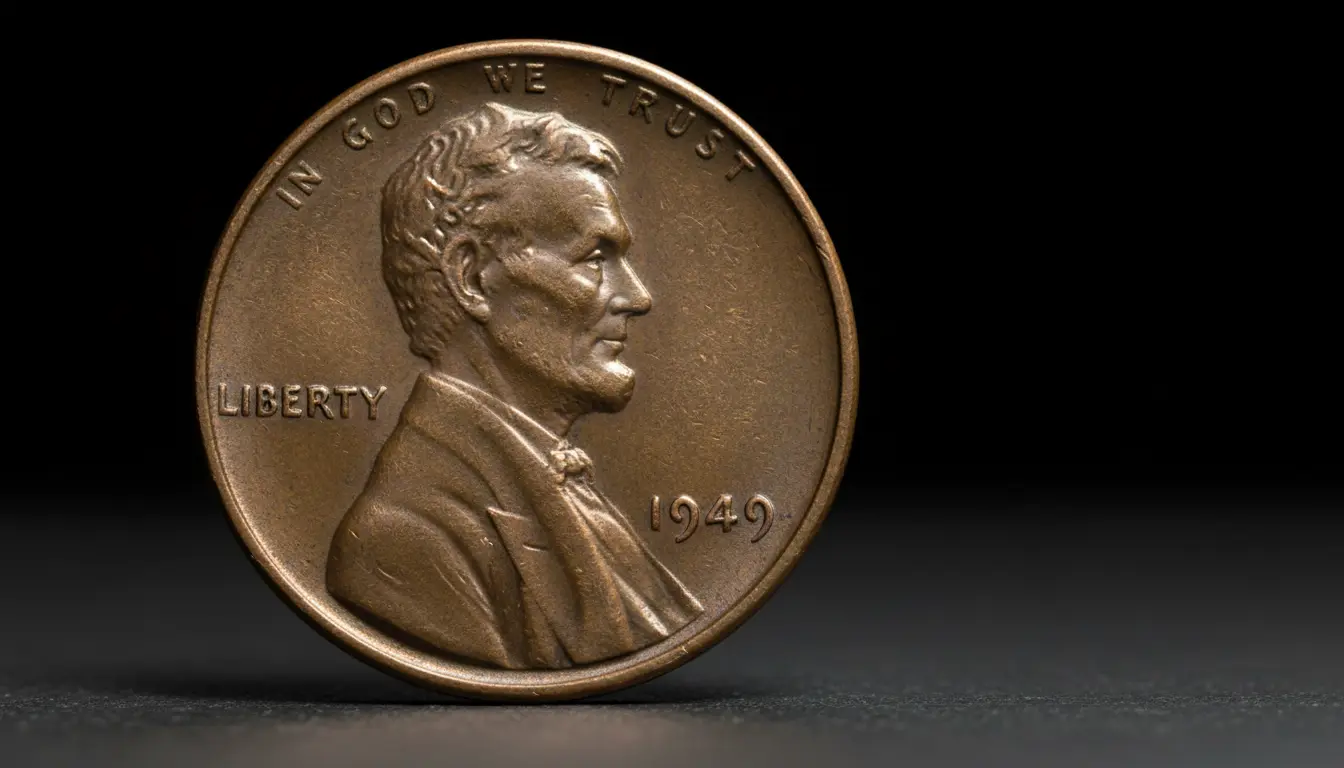
What is the Lincoln Wheat Penny?
The Lincoln Wheat Penny was the United States one-cent coin struck from 1909 to 1958. It replaced the Indian Head cent and featured Abraham Lincoln on the obverse and two wheat stalks on the reverse.
Designed by Victor David Brenner, the Lincoln Wheat Penny marked the first time a U.S. coin carried a real person’s portrait. Collectors value it for historical importance and many collectible varieties.
Lincoln Wheat Penny History and Background
The Lincoln Wheat Penny debuted in 1909 to commemorate Lincoln’s 100th birthday. The design change was significant in American coinage and prompted wide public interest.
During its 50-year run the coin saw design tweaks, mint mark changes, and notable errors. These factors affect rarity and collector demand today.
How to Identify a Lincoln Wheat Penny
Identification begins with the obverse and reverse. The obverse shows Lincoln’s portrait facing right with the date at the lower right. The reverse has two stylized wheat stalks with the words ONE CENT in the center.
Look for the mint mark under the date on the obverse for coins after 1909. Common mint marks are ‘D’ for Denver and ‘S’ for San Francisco. No mint mark typically means Philadelphia.
Key identification features
- Date range: 1909–1958
- Designer initials: VDB (initials of Victor D. Brenner) appear on some 1909 issues
- Mint marks: none, D, S (positioned below the date)
- Reverse design: two wheat stalks framing ONE CENT
Common Varieties and Rarities of the Lincoln Wheat Penny
Some Lincoln Wheat Pennies are common in circulated grades while a few are highly sought after. Key varieties include the 1909-S VDB, 1914-D, and certain error coins like off-center strikes and double dies.
Other notable coins are the 1955 doubled die obverse and 1943 bronze errors. Rarity depends on mintage numbers, survival rates, and condition.
Examples of significant varieties
- 1909-S VDB — limited mintage with artist initials, high collector interest
- 1914-D — lower mintage, scarce in higher grades
- 1955 doubled die obverse — dramatic doubling on the date and lettering
- 1943 bronze cent — wartime error produced when bronze planchets were mistakenly used
Grading and Value Factors for Lincoln Wheat Penny
Condition is the most important factor when estimating value. Grading ranges from Good (G) to Mint State (MS), and each step up can multiply value significantly for rarer dates.
Other factors include strike quality, presence of original luster, and whether the coin was cleaned or damaged. Cleaned coins often lose substantial value.
Simple grading tips
- Good (G) to Very Fine (VF): major wear but date and major details visible
- Extremely Fine (EF/XF): light wear on high points, most detail remains
- About Uncirculated (AU) and Mint State (MS): minimal to no wear, original luster visible
How to Preserve and Store Lincoln Wheat Penny Coins
Proper storage prevents damage and maintains value. Store coins individually in inert holders like Mylar flips, coin capsules, or archival paper envelopes.
Avoid PVC-containing plastics, household cleaners, and abrasive handling. If a coin looks dirty, consult a professional before attempting to clean it yourself.
Buying and Selling Lincoln Wheat Penny Coins
When buying, check for clear photos or inspect coins in person. Verify grade with a reputable dealer or grading service for high-value pieces.
For selling, consider third-party grading if the coin may be rare or valuable. Graded coins typically sell for higher prices and attract more buyers.
Tips for collectors
- Start with affordable common dates to learn grading and spotting errors
- Use reference books or online price guides for current market trends
- Join a local coin club to gain hands-on experience and network
Small Real-World Case Study: Finding a 1909-S VDB
A hobbyist searched estate sale jars and found a 1909-S VDB Lincoln Wheat Penny while sorting loose change. At purchase the coin was mistaken for a common old cent but appeared sharp and had the VDB initials on the reverse.
After authentication by a local dealer the coin proved to be a desirable variety and sold at auction for several thousand dollars. The collector’s patience and basic identification skills made the discovery valuable.
Practical Checklist for New Lincoln Wheat Penny Collectors
- Learn key dates and mint marks to focus your search.
- Practice grading with inexpensive coins before buying high-value pieces.
- Use proper storage to avoid damage and loss of value.
- Research current market values and consult reputable dealers when in doubt.
Final Advice on Collecting Lincoln Wheat Penny Coins
The Lincoln Wheat Penny offers a rich combination of history, accessibility, and collectible depth. Beginners can assemble meaningful collections without large budgets, while advanced collectors chase rarities and error coins.
Focus on learning identification and preservation skills. Over time those practical skills will guide better purchases and higher returns on investment.