
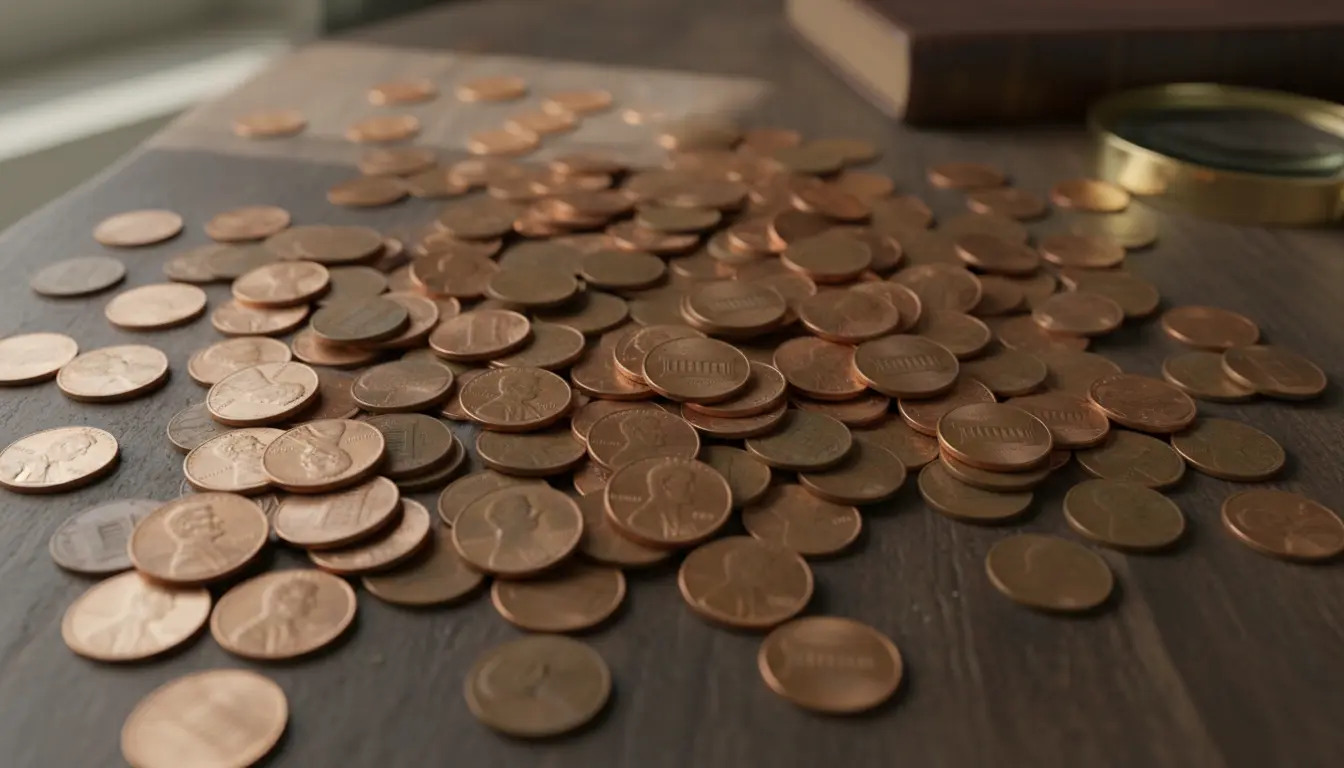
Finding an old-looking penny in your pocket or jar can be exciting. Some Lincoln Wheat pennies are ordinary, but a few rare varieties have brought six-figure prices at auction. This article shows practical steps to identify, protect, and sell a rare Lincoln Wheat penny you might still find in loose change.
Why the Rare Lincoln Wheat Penny Is Valuable
Lincoln Wheat pennies were struck from 1909 to 1958 and have a reverse design with two wheat ears. Most are common and worth face value or a few cents in circulated condition.
Value rises when a coin is scarce, in unusually good condition, or has a notable error. Collectors pay premiums for rare dates, mint marks, doubled dies, and composition mistakes.
Common reasons a Wheat penny can be valuable
- Key dates and low mintage years
- Mint marks indicating scarcity (S, D, or lack of expected mark)
- Die errors such as doubled die obverse or repunched mint marks
- Unusual metal composition (for example, a copper 1943)
- High grade (little wear, original luster)
Key Dates for Rare Lincoln Wheat Penny
Learn which dates and varieties commonly draw strong interest from collectors and dealers. These are the ones to spot first if you are sorting change.
- 1909-S VDB — First year of the Lincoln cent and a top key date.
- 1909-S — Without VDB sometimes also valuable depending on condition.
- 1914-D — Low mintage and desirable when in good condition.
- 1922 No D — Some 1922 cents lack a visible mint mark and can be rare in certain die states.
- 1955 Doubled Die Obverse — A famous doubled die error with prominent date and lettering doubling.
- 1943 Copper — Most 1943 cents are steel; a copper 1943 is extremely rare and valuable.
How to Check Loose Change for a Rare Lincoln Wheat Penny
Use a simple routine when sorting coins so you don’t miss important features. You don’t need expensive gear to find potential treasures.
Step-by-step checklist to inspect pennies
- Separate wheat-back pennies (1909–1958) from newer shields or Lincoln Memorial cents.
- Look at the date first. If the date is one of the key dates above, set the coin aside.
- Check the reverse for doubled lettering or doubling on the obverse (especially on 1955 pieces).
- Inspect the mint mark (below the date). Note unusual spacing, repunching, or missing marks.
- Hold the coin to light; original luster and strike details can indicate a high grade.
- Do not clean the coin. Cleaning can destroy collector value.
Tools That Make Inspection Easier
Affordable tools speed up identification and protect value. You don’t need to be a professional to use them correctly.
- 10x jeweler’s loupe or magnifier
- Soft gloves or cotton tweezers to avoid fingerprints
- White paper and a soft brush to remove loose dirt (do not scrub)
- Reference guide or app with images of key varieties
Lincoln Wheat cents were made from 1909 to 1958 and feature two wheat ears on the reverse. Some error coins from this series have sold for six figures at auction. Never clean a potentially valuable penny — cleaning often cuts its market value dramatically.
Grading and Selling a Rare Lincoln Wheat Penny
After you set aside a potential rare penny, the next steps are authentication and finding the right market. A reliable grade and provenance raise buyer confidence.
Practical steps to authenticate and sell
- Get opinions from two or three reputable coin dealers or local coin clubs.
- Consider third-party grading from PCGS or NGC for high-value coins. Grading protects buyers and often increases sale price.
- Choose the right sales channel: auction houses for very rare pieces, specialist dealers for quick sales, or online platforms for wide exposure.
- Collect documentation — photos, dealer notes, and grading reports — to support the asking price.
Case Study: A Coin Found in a Jar
A homeowner cleared out a long-forgotten jar of coins and noticed a 1955 penny with strong doubling on the obverse. They posted photos to a local coin club forum and were advised to have the coin photographed and sent for grading. After professional authentication as a 1955 doubled die, the owner consigned the coin to an auction specializing in error coins and received a competitive bid. The owner’s practical steps — not cleaning the coin, seeking multiple opinions, and using a specialized auction — produced a better financial outcome than selling to the first buyer who made an offer.
Practical Tips Before You Sell
- Keep several clear, well-lit photos of both sides of the coin.
- Keep the coin in a protective holder to avoid further wear.
- Get multiple price opinions — dealers and auction estimates may differ widely.
- Factor in grading and auction fees when you calculate expected proceeds.
Loose change still hides surprises. By learning to spot key dates, checking for errors, and following a careful authentication path, you can turn a small jar of pennies into something much more valuable. Start with a magnifier, a checklist, and patience — and you may uncover a rare Lincoln Wheat penny that collectors prize.