
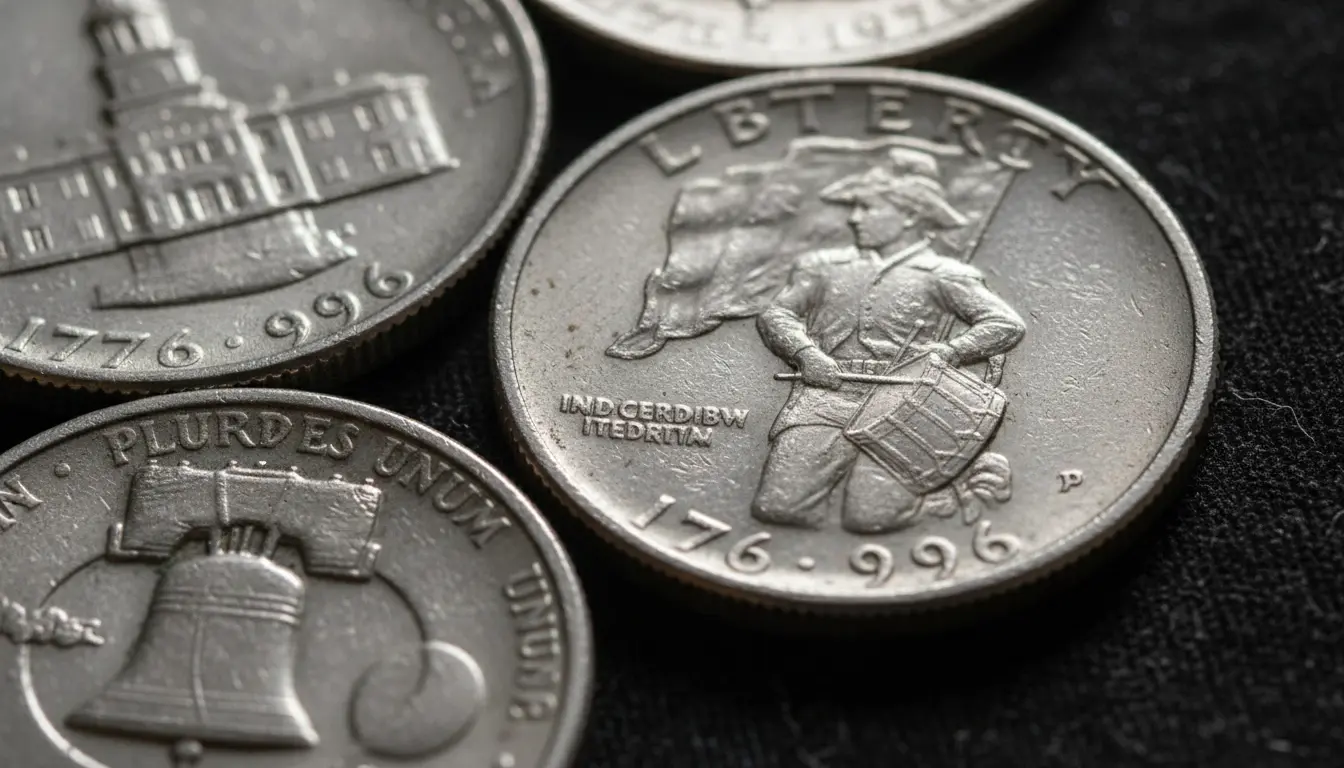
The internet often repeats sensational claims about rare coins. One recent headline says 8 rare Bicentennial quarters are circulating and each is worth $270 million. This article explains how to evaluate that claim, how to authenticate Bicentennial quarters, and what steps to take if you think you own something valuable.
Are 8 Rare Bicentennial Quarters coins circulating with the value of $270 Million each?
Short answer: No realistic evidence supports that claim. Viral posts and clickbait often inflate values for attention. Serious coin values are based on rarity, condition, provenance, and verified auction results. There are rare Bicentennial quarter varieties and error coins, but none have reliable market records near $270 million each.
Why the $270 million claim is implausible
- Market records: Auction houses and grading services track real sale prices. No verified sale approaches tens or hundreds of millions for modern U.S. quarters.
- Circulation numbers: Millions of Bicentennial quarters were produced in 1975–1976. High numbers make astronomical scarcity impossible.
- Authentication gap: Extraordinary values require solid provenance and third-party authentication (PCGS, NGC). Viral claims rarely include these proofs.
How to verify a Bicentennial quarter if you see a viral claim
Follow a step-by-step verification process to separate fact from fiction. Use basic tools and trusted experts before accepting any headline value.
Practical steps to authenticate a coin
- Inspect visually: Use a magnifier to check mint marks, date (1776–1976 on Bicentennial coins), and any unusual doubling or die breaks.
- Compare weight and dimensions: A standard 1976 clad quarter weighs about 5.67 grams and measures 24.3 mm. Large deviations can indicate a different metal or counterfeit.
- Look for provenance: Ask where the coin came from and whether any paperwork, receipts, or auction catalogs exist.
- Check reference guides: Use resources from PCGS, NGC, or specialized books on coin varieties to match die varieties and error types.
- Get third-party grading: For any potentially valuable specimen, submit the coin to a reputable grading service for authentication and grading.
Common Bicentennial quarter varieties and realistic values
Collectors do seek specific 1976 quarter varieties and errors. Here are a few real categories and their general market expectations.
- Proof and silver-clad issues: Special proof sets and silver-clad collector pieces from 1976 exist. These are worth modest premiums to collectors, usually tens to a few hundred dollars depending on condition.
- Error coins: Struck-throughs, double-dies, or off-center strikes can be collectible. Values range from a few dollars to several thousand for dramatic, verified errors.
- High-grade circulation pieces: Uncirculated or mint-state examples can fetch higher prices, typically in the low hundreds to low thousands depending on grade.
What is NOT realistic
No credible numismatic auction or certified sale lists a Bicentennial quarter at millions, let alone $270 million. Treat such messages as misinformation unless an authoritative source proves otherwise.
How to protect yourself and properly sell or appraise a rare coin
If you believe you own a valuable coin, follow conservative steps to protect value and avoid scams. Proper handling and verified channels matter.
- Handle coins by the edge and store in inert holders to avoid damage.
- Use reputable dealers: Check dealer credentials, memberships in associations such as the ANA, and online reviews.
- Get multiple opinions: Start with a local coin shop, then seek grading or appraisal from PCGS or NGC before listing at auction.
- Avoid instant-cash offers that sound too good or too low. Research recent auction prices for similar items.
Where to get coins graded
Two widely used third-party grading services are Professional Coin Grading Service (PCGS) and Numismatic Guaranty Company (NGC). Grading provides authentication, condition grade, and a tamper-evident holder that helps buyers trust the item.
Small real-world example: a careful approach
A local collector found a worn Bicentennial quarter with unusual doubling around the date. Instead of jumping to claims, they photographed the coin, compared it to online PCGS images, and visited a reputable dealer. The dealer suggested submitting the piece to a grading service. The coin was authenticated as a documented doubled-die variety and graded as AU58, selling later for a few thousand dollars at auction. The process showed verification and provenance matter far more than viral price tags.
Quick checklist if you encounter a viral coin claim
- Don’t believe headlines without sources.
- Inspect the coin and compare to reference images.
- Seek out third-party grading for any high-value claim.
- Consult reputable dealers and auction houses for realistic market estimates.
Viral stories about 8 rare Bicentennial quarters each worth $270 million are a reminder that extraordinary claims need extraordinary proof. Use careful inspection, trusted references, and professional grading to separate fact from fiction and to protect any genuine numismatic value you may hold.