
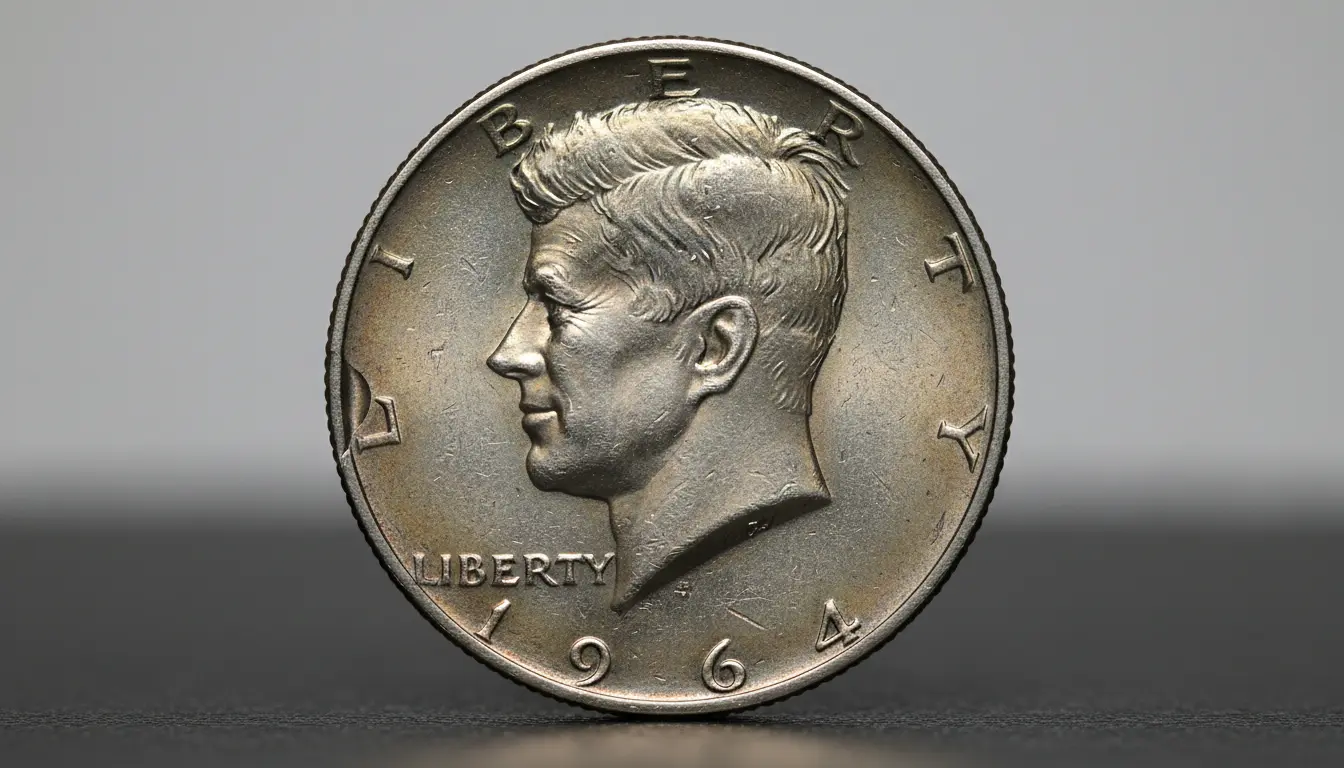
The Kennedy half dollar series is a favorite for collectors and investors. Many coins look ordinary but hide minting errors that push their value well above face. This guide explains the hidden errors in Kennedy Half Dollars and gives practical steps to identify and assess them.
Hidden Errors in Kennedy Half Dollars That Add Value
Not all errors are dramatic. Some are subtle differences visible only under magnification. Knowing the main types helps you find pieces that collectors prize.
Off-center Strikes
An off-center strike means the design is not aligned with the planchet. Small offsets are common and low value, but large offsets exposing plain rim or edge can be valuable.
- Look for exposed plain metal beside the design.
- Offsets over 20% are more interesting to collectors.
- Certified off-center pieces command higher prices, especially in high grade.
Double Die and Repunched Mintmark Errors
Double die errors occur during hubbing and show obvious doubling of letters, dates, or devices. Repunched mintmarks (RPM) show overlapping mintmark impressions.
- Check the date, motto, and mintmark under 10x magnification.
- Doubling on the date or LIBERTY is especially desirable.
- RPMs are sought by variety collectors and can add significant value.
Die Cracks, Cuds, and Breaks
Dies wear and break. Die cracks appear as raised lines on the surface; cuds are chunks missing from the die that leave raised blanks on the coin.
Collectors want unique patterns. Long die cracks that form networks or large cuds near the rim are particularly collectible.
Struck-Through and Struck-Over Errors
Debris trapped between die and planchet can create struck-through marks — unusual textures or pits on the face. Overstrikes happen when a coin is struck more than once or over another coin.
- Struck-through pieces show irregular depressions or raised lines, often with foreign metal embedded.
- Overstrikes can show ghost images of the prior design and are rarer on modern Kennedy halves.
Clipped Planchets and Broadstrikes
Clipped planchets occur when the metal strip is improperly cut, leaving a flat or curved missing section. Broadstrikes are struck without the retaining collar and appear flatter with a wider diameter.
Both types are easy to spot and often attract hobbyist interest depending on size and grade.
How to Verify Hidden Errors in Kennedy Half Dollars
Finding a possible error is only the first step. Verification and documentation increase buyer confidence and value.
Tools You Need
- 10x jeweler’s loupe or stereo microscope
- Soft gloves and coin holder to avoid fingerprints
- Scale and calipers for measuring weight and diameter
- Reference books or online databases for known Kennedy varieties
Step-by-Step Verification
- Examine under 10x magnification for doubling, die marks, or foreign material.
- Measure diameter and thickness to detect broadstrikes or clipped planchets.
- Compare imagery from variety guides to spot known RPMs or doubled dies.
- Document with clear photos and note provenance if possible.
When to Get a Coin Graded
Certification by PCGS, NGC, or ANACS solidifies value for error coins. Grade and authentication reduce buyer uncertainty.
- Submit coins with clear, significant errors or those you plan to sell for a premium.
- Lightly circulated coins with dramatic errors usually benefit from grading.
- Minor or common errors may not pay for the grading fee.
Market Factors That Influence Value
Rarity, quality, demand, and documentation all affect price. A dramatic but low-grade error may still outsell a faint error in mint state.
- Rarity: Unique or low-population errors are most valuable.
- Condition: Sharper strikes and original surfaces fetch higher prices.
- Demand: Certain years and mintmarks attract stronger collector interest.
- Provenance: Auction records and prior ownership history help establish value.
Some of the highest premiums for Kennedy half dollars come from subtle die varieties that were unnoticed for decades. A well-documented doubling or RPM can add 10x or more to a typical coin’s value.
Real-World Example: A Small Case Study
A collector purchased a roll of mixed Kennedy halves at a local flea market. One coin showed strong doubling on the date and LIBERTY under magnification. The collector documented the coin, had it graded, and listed it on a major auction site.
Because the doubling matched a recognized doubled die variety and the coin was in above-average condition, it attracted competitive bidding from variety collectors. The final sale price was several times higher than a normal circulated half of the same year.
This case illustrates the practical path: spot, document, verify, grade, and then sell with provenance.
Practical Tips for Collectors
- Always use gloves and hold coins by the edge to preserve surfaces.
- Join variety-collector forums and use online databases to confirm discoveries.
- Keep a detailed record: where and when you found the coin, photos, and any grading submissions.
- Be cautious about cleaning — cleaning often reduces value.
Hidden errors in Kennedy Half Dollars present real opportunities, but success depends on careful identification and sound documentation. With the right tools and habits, even casual collectors can find coins that jump in value.