
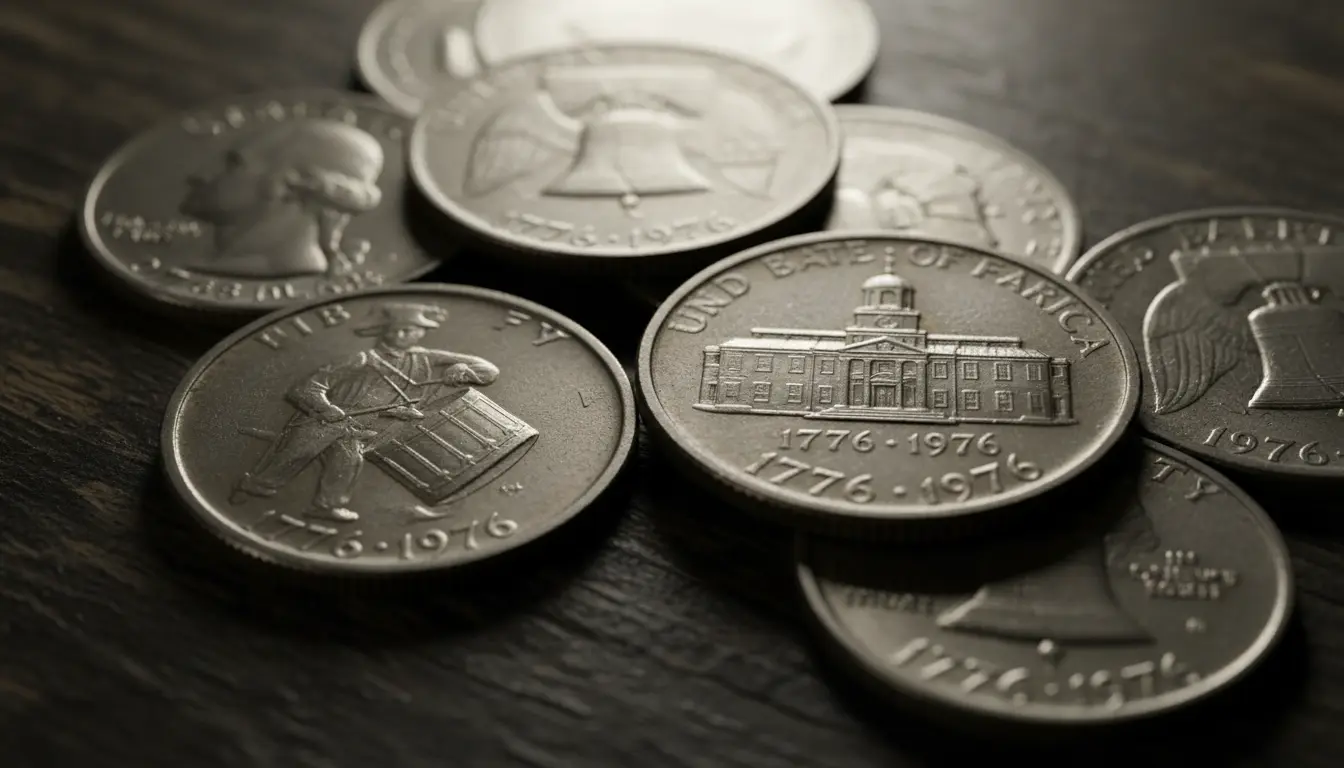
The 1776–1976 Bicentennial quarter is common in pocket change, but certain examples still command premiums. This guide explains which Bicentennial quarters are worth the most in 2025, how to identify them, and what to do if you find one.
Which Bicentennial Quarters Are Worth the Most in 2025
The main value drivers for Bicentennial quarters are composition, grade, and striking errors or varieties. In 2025, top-value categories include silver proof issues, high-grade uncirculated business strikes, and documented error coins.
Silver Proof 1976-S Quarters
Special 1976-S proof quarters struck on 40% silver planchets are widely recognized as the most consistently valuable Bicentennial quarters. These were sold in mint and proof sets and usually have a mirror-like finish.
Why they matter:
- Silver content appeals to both collectors and precious-metal buyers.
- High-grade certified proofs (PR65 and above) have the best resale value.
High-Grade Business Strikes (MS65+)
Most circulation strikes are common, but business strikes graded MS65 or higher by PCGS/NGC are scarce. These coins show strong luster and minimal contact marks.
Collectors pay a premium for exceptional condition, especially if the coin is slabbed and attributed by a major grading service.
Error Coins and Major Varieties
Notable error types can be worth significantly more than face value. Look for off-center strikes, clipped planchets, broadstrikes, and clear doubling of devices (doubled dies).
- Small errors: typically tens to low hundreds of dollars depending on severity.
- Major, dramatic errors with documentation or high-grade certification can reach high hundreds or thousands.
How to Identify Valuable Bicentennial Quarters
Start with simple visual checks, then move to verification steps if you suspect a valuable coin. Most valuable examples stand out on inspection.
Look for Mint Mark and Finish
Check the obverse and reverse for the mint mark. The 1976-S proof (especially when coupled with proof finish) is key for silver varieties. Proof coins have a mirror-like field and frosted devices.
Examine Condition and Luster
Use a loupe (10x) to inspect for bag marks, hairlines, and surface wear. Sharp devices, full detail, and original luster increase value. If a coin appears new and flawless, consider professional grading.
Spotting Errors
Common error signs include off-center strikes, missing metal edges, doubled letters or dates, and mismatched planchets. Photograph any suspect coin and compare to reference images before selling or submitting for grading.
What Values Look Like in 2025
Values vary widely by category. The ranges below are general and based on market trends in 2024–2025.
- Common circulated Bicentennial quarters: face value to a few dollars.
- Uncirculated business strikes (MS60–MS64): single digits to low tens of dollars.
- High-grade business strikes (MS65+): tens to hundreds of dollars.
- 1976-S silver proofs (certified PR65–PR70): tens to a few hundred dollars; top grades bring the best prices.
- Major error coins and documented varieties: tens to thousands depending on rarity and demand.
The Bicentennial quarter was minted in 1975 and 1976 with the dual date 1776–1976. There was no 1976-dated circulation strike; all Bicentennial quarters bear the dual date.
How to Authenticate and Grade a Valuable Quarter
If you believe you have a valuable piece, follow safe steps to confirm authenticity and maximize resale value. Avoid cleaning or altering the coin.
- Document the coin with clear photos of obverse, reverse, and edges.
- Compare to trusted references or online variety guides.
- Consider third-party grading (PCGS, NGC) for high-value candidates.
- Ask for opinions from reputable dealers or experienced collectors before selling.
Testing Silver Content
Avoid destructive tests. Prefer verifying original mint packaging, certificates, and professional testing. Specialist dealers can perform non-invasive XRF tests to confirm metal content.
Where to Sell or Insure High-Value Bicentennial Quarters
Options include auction houses, reputable coin dealers, and major online marketplaces. For very valuable items, use established coin auction firms that handle authentication and publicity.
Insure notable coins by adding them to a collectibles policy or a scheduled personal property endorsement. Keep purchase or grading receipts as proof of value.
Case Study: Real-World Example
A collector discovered a 1976-S proof quarter tucked in a proof set from the 1970s. After submitting the coin to a major grading service, the coin received a high proof grade and sold to a private buyer who wanted a certified silver proof for a historical set. The seller achieved a price well above typical online listings because of the slab certification and clean provenance.
Practical Tips for Collectors
- Keep coins in original packaging or inert holders to preserve condition.
- Use reputable grading services for high-value pieces.
- Research recent sales for similar coins before setting a price.
- Beware of cleaning; it often reduces value.
In 2025, most Bicentennial quarters remain inexpensive, but silver proofs, high-grade business strikes, and major errors are where you’ll find real value. If you think you have one of these, document it carefully and consult a trusted expert before selling or altering the coin.