
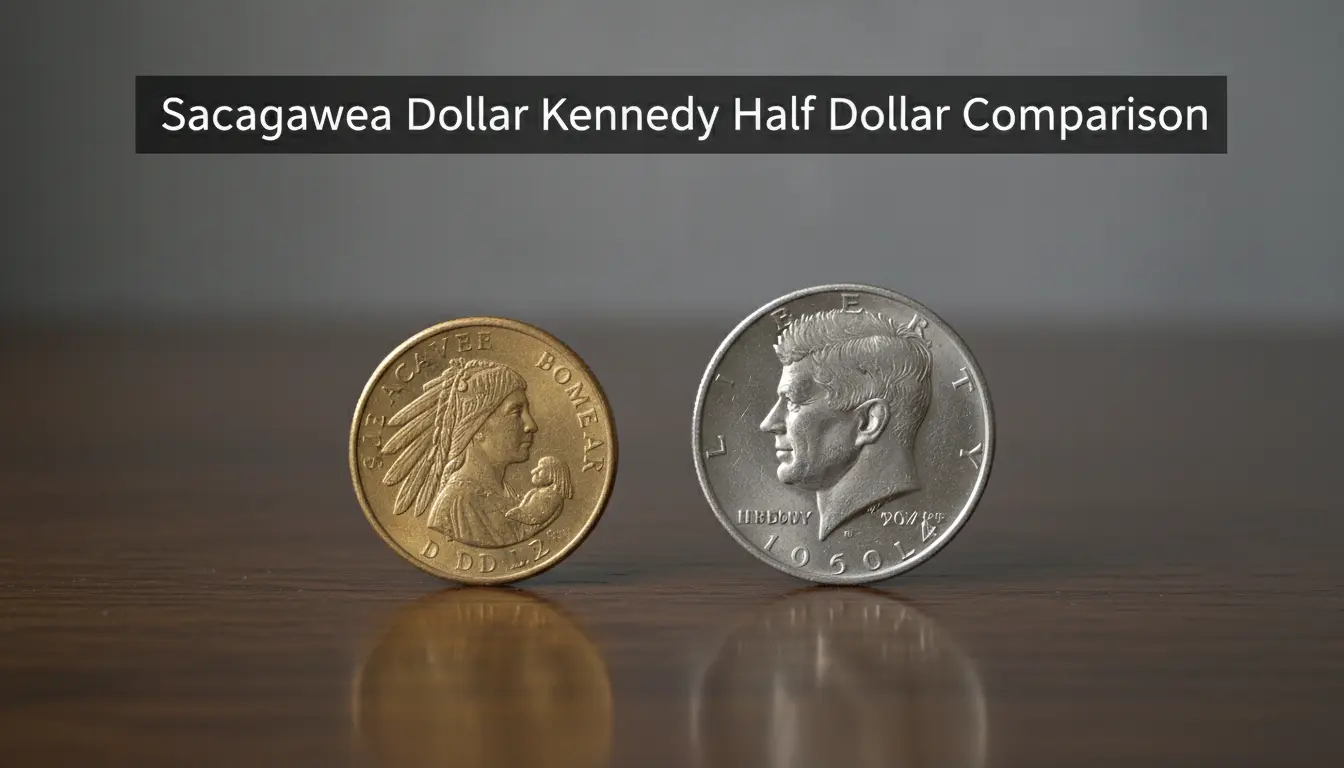
Sacagawea Dollar vs Kennedy Half Dollar: A Practical Overview
Choosing between the Sacagawea dollar and the Kennedy half dollar depends on what you value: historical context, metal content, or ease of collecting. Both coins are staples of modern U.S. numismatics, but they offer different benefits for beginners and experienced collectors.
Design and History: Sacagawea Dollar vs Kennedy Half Dollar
The Sacagawea dollar was introduced in 2000 to provide a modern one-dollar coin. It features a Native American woman and a modern, golden look that stands apart from older U.S. coins.
The Kennedy half dollar debuted in 1964 as a memorial to President John F. Kennedy. Its design is widely recognized and has been struck in several metal compositions over time.
Why history matters for collectors
Historical context affects desirability. The Kennedy half ties directly to a historical event and era, while the Sacagawea dollar fits into theme collecting focused on American figures and modern minting technique.
Metal Content and Physical Differences
Metal content is a practical factor when assessing long-term value. Kennedy halves minted in 1964 are 90% silver; 1965–1970 halves used reduced silver content, and post-1970 coins are copper-nickel clad. That silver content can give older halves intrinsic metal value.
Sacagawea dollars are struck in a modern golden-colored alloy and have no silver content. They are lighter and smaller than most half dollars, and their color makes them easy to identify in a collection.
Collector implication
- Silver Kennedy halves appeal to bullion and history-focused collectors.
- Sacagawea dollars appeal to modern series collectors and those who prefer thematic sets.
Rarity, Mintage, and Value
Value depends on year, mint mark, condition, and collector demand. Many Kennedy half dollars are common, but low-mintage or high-grade examples bring premiums. Pre-1971 silver halves often carry a baseline value tied to silver content plus numismatic premium.
Sacagawea dollars generally have modest collector value in typical circulated grades. Special issues, proof sets, and error coins may command higher prices for dedicated modern coin collectors.
How to research value
Check recent auction results, price guides, and dealer listings for the specific year and mint mark. Condition (grade) greatly affects value; certified coins often sell for more.
Collectability: Which Coin Sparks Your Collection?
Decide what motivates your collection. Are you drawn to metal composition, historical stories, or completing series? Each coin offers a different starting point and growth path.
When to choose the Sacagawea Dollar
- You want a modern-looking, colorful add to pocket change or thematic sets.
- You prefer completing annual sets, including proofs and circulating strikes.
- You enjoy searching for modern errors and varieties.
When to choose the Kennedy Half Dollar
- You want historical depth and connection to the 1960s era.
- You value silver content in older coins and potential bullion value.
- You aim to collect high-grade, vintage pieces or specific mint-mark varieties.
Practical Storage, Display, and Budget Tips
Both coins are easy to store but require thoughtful protection. Use acid-free coin flips, capsules, or albums. Label each item with year, mint mark, and grade notes as you acquire pieces.
Set a budget and collecting goal. For a series, decide whether to collect circulated examples or invest in proofs and certified high-grade coins.
Checklist for new collectors
- Decide a budget and timeline for completing sets.
- Choose storage: flips, albums, or coin slabs for valuable pieces.
- Use price guides and auction sites to track realistic values.
- Join local clubs or online forums for trades and verification.
The Kennedy half dollar was introduced very soon after President Kennedy’s assassination and quickly became a popular collector item. Many later halves were produced mostly for collectors rather than everyday circulation.
Case Study: A Beginner Collector Chooses a Path
Sam is a new collector with modest funds and interest in both history and completing sets. He chose to split his early purchases: one certified 1964 Kennedy half for historical and silver value, and a small set of modern Sacagawea dollars to start a thematic series. This approach gave Sam both an asset with intrinsic metal content and a growing modern set to enjoy.
Over two years Sam traded duplicates at a coin club, upgraded a few pieces to better grades, and learned how condition and rarity affect price. His mixed approach kept collecting interesting and diversified his holdings.
Final Practical Decision Guide: Which Coin Is Right for You?
Use this short decision guide to choose quickly.
- If you want historical significance and silver value, lean toward the Kennedy half dollar.
- If you prefer modern design, thematic sets, and easy recognition, choose the Sacagawea dollar.
- If you can, collect one of each to benefit from both historical depth and modern series building.
Both coins have a place in a well-rounded collection. Start with clear goals—whether metal value, historical context, or visual appeal—and let that guide your purchases. Regular research and involvement in the collecting community will help you refine choices and spot valuable opportunities.